

Obsah článku
- Why AI Answers Are Replacing Blue Links in GEO B2B Marketing Research
- SEO vs. GEO B2B Marketing: What Actually Changes
- Building a GEO B2B Marketing Roadmap in Five Steps
- 1. Map Content to Conversational, High-Intent Buyer Queries
- 2. Maximize “Proof Density” with Unique Statistics and Expert Quotes
- 3. Fortify E-E-A-T Using Detailed Author Bylines and Credentials
- 4. Prioritize Third-Party Validation (G2, Capterra, and TrustRadius)
- 5. Restructure Case Studies for Easy AI Parsing and Citation
- Connecting GEO B2B Marketing to Pipeline and Conversion Rate Optimization
- Conclusion
GEO B2B marketing is becoming something every marketing team has to think about, ready or not. Buyers no longer click through ten blue links before calling a vendor. They ask a chatbot a question, get a short answer with a few sources attached, and go straight to their shortlist. If your content isn’t one of those sources, buyers never see you at the moment it matters most.
This guide covers how B2B buyers research vendors today, how GEO is different from classic SEO, and an easy five-step plan you can start using right away.
Why AI Answers Are Replacing Blue Links in GEO B2B Marketing Research
A few years ago, buyers researched new software by Googling, opening tabs, and piecing together an opinion from blogs and review sites. That still happens, but less often now.
Now the first stop is often an AI assistant. Someone might ask “what’s the best contract tool for a mid-size manufacturer” and get a short answer naming a few vendors, with links showing where the info came from. There’s no long search anymore — just one answer that either includes your brand or doesn’t.
This matters a lot in B2B, because these purchases involve many people, long sales cycles, and a lot of quiet research before anyone talks to sales. If the AI answer a buyer sees during that quiet research leaves you out, you may never get a chance to pitch at all. That’s why GEO B2B marketing has become a top priority for so many teams.
SEO vs. GEO B2B Marketing: What Actually Changes
Traditional SEO was built around rankings. You picked a keyword, wrote a page better than your competitors, earned some backlinks, and waited for Google to put you at the top. It was easy to measure, and success meant getting a click.
GEO works differently. Instead of a ranked list, it’s about whether an AI picks your content as a source for its answer. There’s no “top spot” — either you get cited, or you don’t. SEO rewards keywords and page structure. AI models reward clear, accurate content that’s easy to quote correctly.
Trust also works differently. Search engines look at backlinks to judge authority. AI models look at whether facts about you match across the whole web. If your website says one thing and your G2 reviews say something else, that mismatch can quietly hurt you in ways old SEO never punished.
None of this means SEO is dead. It means GEO B2B marketing adds a new layer: writing so your content can be pulled out and used, not just ranked.

Building a GEO B2B Marketing Roadmap in Five Steps
Turning GEO B2B marketing into a real program doesn’t mean rebuilding your whole content team. It means changing what “good content” looks like, in five practical areas.
1. Map Content to Conversational, High-Intent Buyer Queries
Buyers don’t type into AI tools the way they typed into Google. Instead of “CRM features,” they ask something like “which CRM handles multi-currency invoices for a 200-person company.” That’s a full question with real business details built in.
Start by writing down the actual questions your sales team hears on calls. Then write content that answers those questions clearly, near the top of the page. Skip the long intro. Answer the question in the first few sentences, then add detail below. AI tools tend to pull from content that gets to the point fast.
2. Maximize “Proof Density” with Unique Statistics and Expert Quotes
Vague lines like “our platform improves efficiency” give an AI nothing solid to quote. Real numbers do. If your onboarding cuts setup time by 40%, say so, and say where that number comes from. If someone on your team has a sharp opinion on your industry, quote them by name.
This is proof density — filling your content with specific, sourced facts instead of soft marketing language. The more real numbers your page has, the more useful it is to an AI writing an answer, and the more likely you get named directly instead of skipped.
3. Fortify E-E-A-T Using Detailed Author Bylines and Credentials
Experience, expertise, authority, and trust aren’t just a Google guideline anymore. They’re a filter AI tools use to decide whose content is safe to quote. A post with no named author, or one just credited to “the team,” looks less trustworthy than one written by a real person with a title and background.
Add real bylines. Include a short bio with credentials, experience, and a link to that person’s profile. If someone on your team knows the subject well, let their name and background carry some weight. This is a cheap fix that most companies still skip.
4. Prioritize Third-Party Validation (G2, Capterra, and TrustRadius)
Your own website is the least neutral source about your own product, and AI tools seem to know it. Independent review sites carry more weight simply because they aren’t yours. When happy customers leave detailed reviews on G2, Capterra, and TrustRadius, it helps human buyers compare options — and it gives AI tools independent facts to check your claims against.
Make review collection a regular part of your customer success work, not a once-a-year push. Steady, detailed reviews across several platforms give outside proof that strengthens your whole GEO B2B marketing effort.
5. Restructure Case Studies for Easy AI Parsing and Citation
Case studies are often written like little stories: a company had a problem, tried your product, and everything worked out. That’s nice to read, but hard for an AI to pull clean facts from.
Rewrite case studies so the key facts stand out on their own — industry, problem, result, and the exact number. Use short, labeled sections instead of one long story. A line like “cut onboarding time from six weeks to nine days” is much easier to quote correctly than the same fact buried in paragraph four.

Connecting GEO B2B Marketing to Pipeline and Conversion Rate Optimization
None of this matters if better AI visibility doesn’t turn into real pipeline. GEO needs to connect to how you already measure marketing, not sit off to the side as an experiment.
Track which pages get cited by AI tools, and check that against leads who say they found you through an AI assistant. Send that traffic through the same paths you already use for SEO — clear calls to action, easy demo requests, and pages built for conversion once someone clicks through from an AI answer.
The goal isn’t just being visible. It’s making sure that when an AI assistant names your company as a good option, the next click leads somewhere that actually converts. Treat GEO as part of your existing pipeline plan, not a separate project.
Conclusion
AI now helps choose which vendors buyers see. Win at GEO B2B marketing with clear content, real proof, and real trust. Start with these five steps.

Zakladateľ agentúry Market. Brand. Grow. Taktiky, o ktorých píšem, najprv testujem na vlastných projektoch — od účtu so 450 000 sledovateľmi po web zo 4. strany Google na prvú.
Všetky články autora →Súvisiace články
AI SEO stratégia: Ako dostať svoj web do AI vyhľadávania a zvýšiť online viditeľnosť
Obsah článkuAko AI SEO stratégia mení spôsob vyhľadávania Od klasických výsledkov k odpovediam, ktoré vedú používateľa AEO, GEO a LLMO nie sú iba nové…
5. 10. 2026 · Peter TerlandaAko sa dostať do AI odpovedí: Nová disciplína GEO a čo znamená pre firmy
Obsah článkuAI mení vyhľadávanie: už nestačí byť prvý v Google1. Čo je AI Overview a prečo by vás malo zaujímaťZistenie z praxe2.…
27. 9. 2026 · Peter Terlanda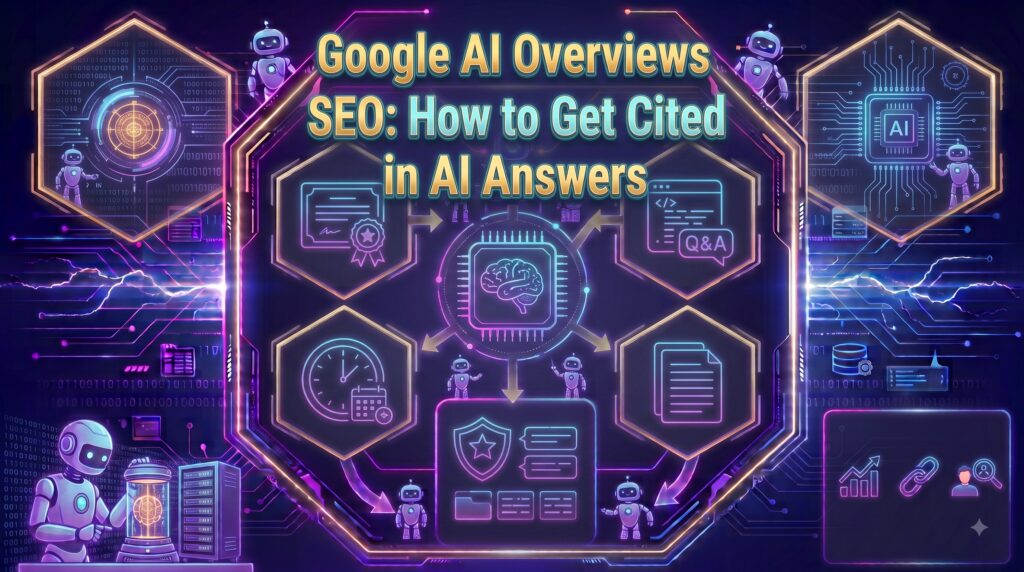
Google AI Overviews SEO: How to Get Cited in AI Answers
Obsah článkuWhat Are Google AI Overviews? What This Shift Really Means for Your Clicks and Visits How to Earn a Spot Inside the Answer…
24. 9. 2026 · Peter Terlanda Bezplatná konzultácia
Radšej by ste to nechali na odborníka?
15 minút s autorom článku — prejdeme váš web a odídete s konkrétnymi návrhmi. Bez záväzku.
Chcem bezplatnú konzultáciu →